REGGAE NEWS
Righteous finger on reggae pulse
Posted by
on January 20 2010 at 11:06
Category : Artists
When Steel Pulse started out in the rough and tough Birmingham district of Handsworth in the mid-70s they got support from an unlikely source.
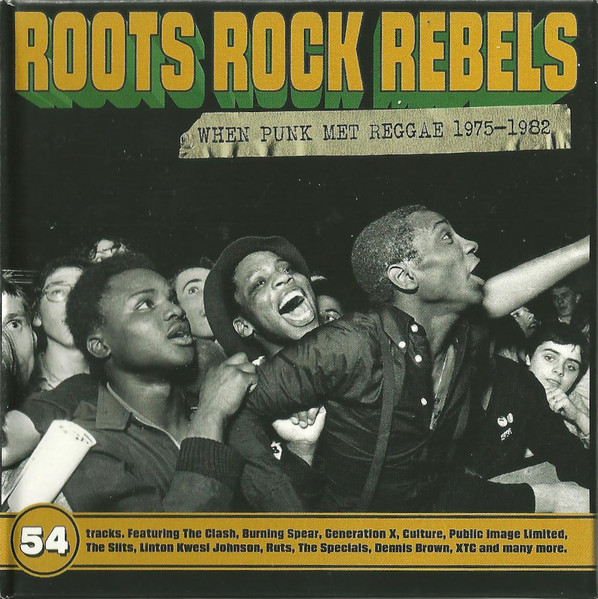
While the roots reggae band were shunned by live venues and radio stations because of their staunch lyrics about the plight of black youth, racism and police brutality, the punk crowd liked what they heard.
"At that time in Birmingham it was hard to get on the radio if you were a black artist, unless you were on Motown," remembers co-founder and front man David Hinds. "It was like climbing a mountain with one leg. But we generated our fan base around small clubs and managed to amalgamate ourselves with the punk rock acts that were happening at the time."
One of Steel Pulse's early singles was Ku Klux Kan, off their 1978 debut album Handsworth Revolution. Musically it's a cruisy and lilting reggae tune, but lyrically it is combative and resolute with lines like: "I come face to face, with my foe, disguised in violence from head to toe".
He remembers there were one or two black DJs who got the band's early tracks on the radio.
"But when they heard Ku Klux Klan even they were stricken with what the lyrics were saying.
If they played it, it would cost them their livelihoods. So it was almost a no no from the get go."
However, they scored support slots with bands like the Stranglers and the Clash and while some British reggae bands fought against the punk rock association - "They didn't want to have anything to do with that racket" - Steel Pulse jumped on the bandwagon.
"And to be honest, if the punk rock movement had not happened in England there would be no Steel Pulse - or any [British] reggae. Because it was on the backs of the punk rockers that reggae got its foot in the door."
Hinds reckons the two styles rubbed along together because both were all about anarchy. "Reggae, rasta, roots, repatriation, and riots against police brutality. So it was all about anarchy and the punks had their version of anarchy and they would go around buying expensive cardigans, and other clothing, and start shredding them. They did the same thing with their skin with pins and needles, and that came through in their music.
"And back then they said to themselves: 'Hang on, here's another style of music that's about anarchy, so lets join them'. And that's how reggae got on board."
Handsworth Revolution was released by Island Records, Bob Marley's label at the time, but in the 80s Steel Pulse took on a more commercial bent with albums like Caught You and State of Emergency. However, despite this more mainstream edge, the Steel Pulse message has always stayed the same: "To fight injustice, educate, and be positive."
Hinds says this mandate came out of living in Handsworth, a predominantly black and Asian community which he describes as a hostile and heavy place in the 70s.
"The blacks who came there from neighbouring districts were pretty much afraid. It wasn't exactly a gang thing going on, but so many incidents happened in Handsworth that it got a negative reputation.
"Both blacks and whites alike outside that district were pretty much afraid to wander in. But as far as I was concerned it was pretty harmless because I was born and raised there and my friends were from there."
Hinds and friends like guitarist Basil Gabbidon and bass player Ronnie "Stepper" McQueen, who he formed Steel Pulse with, were among the first generation of West Indian immigrants born in Britain by parents who had migrated from the Caribbean in the early 50s.
"Small West Indian communities started building up in all the major cities in Britain, especially London and Birmingham, and because of the high influx of immigrants there was high unemployment and there was always someone to blame for that. There were also the tensions with police, and on the other side there was racism kicking around with the rise of the National Front who were launching a political party at the time. So out of that political and social atmosphere Steel Pulse was born."
Because of the mix of cultures in Birmingham, Hinds and his band mates were exposed to many different styles of music, which is why everything from jazz, R&B, Latin, electronic and dance music has crept into their sound over the years.
This meant, back in the early 80s especially, Steel Pulse was distinct from the reggae coming out of Jamaica.
They first went there in 1981, just a few months after Bob Marley died, and Hinds remembers "my knees were shaking, and my teeth were chattering".
He need not have worried because even though they were very different they got respect because they sounded unique.
"And ever since Jamaica has embraced [us] and holds us in high regard because of our contribution to the music."
By Scott Kara
source : nzherald.co.nz
Melodians keep rocksteady alive
Posted by
on January 08 2010 at 13:38
Category : Artists
As a general rule with rocksteady — the post-ska, pre-reggae form of Jamaican vocal music — if a group's name ends in “-ians,” it's worth a listen.
There are exceptions; some bands without the distinction aren't bad either, such as legendary rocksteady acts the Maytals, the Hepcats, the Gaylads and the Tennors. But the -ian ranks are strong: the Kingstonians, the Abyssianians, the Ethiopians.
The Melodians was a great trio at the forefront of rocksteady's birth in 1965. With the death of Brent Dowe from a heart attack in 2006, the Melodians continue as a sweet-voiced duo. Founding members Tony Brevett and Trevor McNaughton will perform Friday at the Meridian, a rare chance to hear an influential Jamaican institution.
Rocksteady is a fetching musical genre that falls under the reggae umbrella. It shares DNA with its predecessor, ska, though the tempos are sometimes slower. Brass and drums were de-emphasized, and bass moved up in the mix. (The prominence of syncopated bass playing was huge in the development of reggae and can be heard in the wildly inventive playing of Aston “Family Man” Barrett with the Wailers on Saturday at House of Blues.)
In rocksteady greater attention also was given to the vocals, which owed much to American doo wop and R&B, often with an emphasis on harmonies.
Jamaica's music industry sprang from a need to feed a culture primed to dance with DJs and outdoor sound systems that pumped out leg-shaking songs at ear-shaking volumes. Imported American music gradually gave way to an indigenous music initially inspired by it.
Sometimes the influence of American music is easily discernible. The Melodians' I'll Get Along Without You owes a clear debt to a song with a similar title by country-music star Skeeter Davis.
Though the musical culture in Jamaica initially drew from the States, music listeners in the States never really reciprocated the interest in Jamaican music.
Record sales speak for themselves, so most folks in our country are content with their copy of the Bob Marley compilation Legend, still a prerequisite for admission into any university dormitory. For those wishing to dig a bit deeper, rocksteady offers an important discography and storied history of under-heralded groups such as the Melodians.
If the Melodians have a calling card, it's the single Rivers of Babylon, which was featured on the The Harder They Come soundtrack, likely the second-most-owned reggae CD in this country (though not yet a prereq for college-dorm admission). The song was turned into a Top 40 hit in 1978 by Boney M. and has been oft-covered since, including a bluegrassy version by Texas singer-songwriter Steve Earle in 1995.
Rivers wasn't a total deviation for the Melodians, though the band's early singles tended to focus on love. Rivers' biblical plea for deliverance from exile (while name-checking Ethiopian dictator/rastafarian prophet Haile Selassie) represents another side of the band.
Though rocksteady could function as viable party music, it also initiated a focus on social issues that would inform much of the reggae that followed. These acts — stars in Jamaica, even if less known in the States — aren't simply hidden in Marley's shadow; they often influenced the music he sold to the world.
Take the Ethiopians' Everything Crash. There's something Yeats-ian about its center no longer holding, and then come two memorable lines: “Every day the bucket a-go to the well/One day the bottom of the bucket drop out.” I've yet to determine whether there's some really old text with such a quote, but four years after the Ethiopians sang the line, Marley made it the straw/camel's back metaphor that concludes one of his calling cards, I Shot the Sheriff.
By 1969 reggae's skull had hardened, and rocksteady was gone. Marley became ballyhooed as the first third-world superstar, and the rich singles culture of rocksteady faded after a brief period in vogue.
Only some of these acts, including the Melodians, remain on the road, preserving an important and under-appreciated style of song.
By Andrew Dansby - copyright 2010 Houston Chronicle
source : chron.com
Max Romeo releases definitive collection
Posted by
on November 23 2009 at 07:36
Category : Artists
If he could have found people willing to give voice to the lyrics he penned, Max Romeo would have never stood behind a microphone.
"I did not have singing on my mind. I loved poetry. I wanted to be a writer," the man known for saucy songs such as Wet Dream, the wry War Inna Babylon and the joyous Let The Power Fall on I told The Sunday Gleaner.
However, "Nobody would sing my songs. They said they were stupid, so I recorded them myself," beginning with I Will Buy You a Rainbow in 1967.
Forty-two years and 42 albums
later (with a final one in the works at his Charmax Studio in Palm, Treadways, St Catherine), Max Romeo is releasing the bulk of his extensive catalogue
on 10 CDs of 16 songs each. The first five are already out and he is hoping that the next half of the collection will be released before Christmas.
"If you follow my career, I am a person who likes to be original. I have never heard or seen it done before, so I decided to do it," he said.
The collection spans his first recording, Buy You a Rainbow, to 2006's A Little Time For Jah.
He has an eye on his own mortality and has no doubt observed the chaos that has befallen the estates of other singers. "One of the main things is to get the Max Romeo songs in one stable, so in my passing my kids won't have to be all over the place. I am happy to be alive to gather them up for my children," he said.
It helps immensely that Romeo's brother, Lindbergh 'Black Lindy' Lambert, who lives in England, has painstakingly collected the songs from the get-go. "He can find all Max Romeo music," the singer/songwriter said.
The nature of the music business being that a performer will record with multiple producers over the span of his career or even consecutively, almost invariably there are disputes over rights when collections are being put together. Max Romeo has had none and does not anticipate any. "Most of the producers are dead," he said. Further, "I have no contracts with these guys. They never paid me. I am waiting on that (contestations) to happen so I can take them to court."
Each CD in the collection is presented as a chapter, the songs being individual verses. Romeo says "The number one selling book in the history of the world is the Bible. It is written in chapters and verses. I am trying to pull the people who like the Bible." Fittingly, then, the first verse in the first chapter is Maccabee Version.
Banned and Censored
There are some songs that Romeo has deliberately culled from his career-defining collection - the raunchy songs he did before his growth into Rastafari in 1971. Wet Dream, which he says is "semi-rude", makes the cut. The others will be included on another album, Banned and Censored, "for those who like to hear Max Romeo sing about what they are making noise about today". He also plans a live performance CD.
So he has a lifetime of material to choose from at the Charmax showcase, slated for the Palm Community Centre, Palm, Treadways, on Saturday, December 5. Also performing will be his sons, the duo Rominal, Ruffian, Sophia Squire, Jallanzo, Nitro, Singing Cologne, Anjalee, Prince Allah, Dub Tonic Kru, Jimmy Riley, Warrior King, Lutan Fyah and Ras Murdack.
Romeo is satisfied with the response so far to his catalogue collection. "The people are very excited. They can't wait to get it," he said.
By Mel Cooke, Gleaner Writer
source : jamaica-gleaner.com
1980 reggae movie ‘Rockers’ still has cult following
Posted by
on November 11 2009 at 15:02
Category : Others
Reggae and a 30-year-old movie about its Jamaican culture has become popular with a new generation.
Inner Circle includes founding members Ian and Roger Lewis, who both appeared in the 1978 film “Rockers.”
“We didn’t know the reggae sounds was so popular there now, but the movie has become like an underground cult movie in Asia,” Ian Lewis told Lake Tahoe Action after arriving in the United States from the Far East last week. “Remember that ‘Rocky Horror (Picture) Show?’ It became like a cult. ‘Rockers’ movie is like that now in Vietnam and Singapore because younger kids, they like that culture.”
The movie, filmed in six weeks in 1977 at the Kingston ghetto Trenchtown and two weeks in Ocho Rios, is an authentic representation of the Jamaican culture during that era because all the characters portrayed themselves. The loosely written and improvised storyline is a reggae version of Robin Hood.
“When we made that movie everybody was laughing because nobody was no actor,” Lewis said. “It offered up our true vibe because everybody was playing ourselves. They wasn’t trying to be no actor. So that’s the best kind of acting, just be yourself.”
Zephyr Cove real-estate agent Richard Bolen was a “post-production producer” for “Rockers.” Bolen negotiated performance rights, located 26 master recordings and raised $350,000 to finish putting the film together. He also made all the domestic and international film and record distribution deals.
“We knew what we had was good,” Bolen said. “We didn’t know we were catching the roots reggae culture at its epitome.”
While there was extreme poverty, it was also seminal period for Jamaica, which influenced cultures throughout the world.
“It was tantamount to the ’60s generation,” Bolen said. “They thought they were changing the world for a better way.”
Just a few years after “Rockers” was filmed some of reggae’s pioneers were gone. Inner Circle’s Jacob Miller was killed in a 1980 car accident, Bob Marley died of cancer in 1981 and Peter Tosh was murdered in 1987.
“Bob Marley was a living god with them,” Bolen said. “He was significant here but so much more palpable in the Caribbean and Africa and Europe. He was a genuine world spokesman of human spirit and hope, and he knew it.”
Marley did not appear in “Rockers,” but his peers did. And while Bolen was in Jamaica dealing with people who claimed to be in the movie and demanded to be paid, Peter Tosh was on tour with the Rolling Stones, often appearing onstage with a “Rockers” T-shirt.
Although Bolen was surrounded by desperate and dirt-poor Kingston residents during a three-year period, he had two guides and never felt he was in danger.
“They were guides to how the ghetto worked,” Bolen said. “They did protect me but it was more of a vibratory thing. The general consensus was we were there doing Jah works.”
Lewis understands why a new generation appreciates “Rockers.”
“They see it’s real,” he said. “It’s natural. Some of the older folks might see the weed smoking and they’re not used to that. But what they see is a real culture, and the kids like that.
“It made me happy to see something that was done 20, 30 years ago has come full circle to fruition, that people appreciate it for what it is.”
source : tahoe.com
Find "Rockers OST" on Roots Archives overhere
Studio One court case a heavy load - Bob Andy
Posted by
on November 08 2009 at 16:54
Category : Artists
The law suit between singer/songwriter Keith 'Bob Andy' Anderson and the Clement Coxsone Dodd estate continues this month with the singer stating that it is "weighing him down".
The court will determine whether royalties are due from Bob Andy's Songbook, the classic Jamaican album which includes the blockbuster hit, I've Got to go Back Home.
"At issue is the publishing aspect of the songs and the fact that they say they are not obliged to pay me any artiste royalties," Andy told the Sunday Observer in an interview Thursday, just days after his 65th birthday. Andy is one of the rock steady era's most prolific hitmakers.
Both parties are said to be in negotiations but are at odds over the authenticity of a signature bearing Andy's name, apparently relinquishing his publishing rights. However, Andy denies having signed any such document. No one at Studio One was available for comment up to press time. Both parties should meet in the Supreme Court chambers on the November 24, Andy said.
"We are supposed to have a case management to discuss a possible settlement," he explained.
It will be the second Studio One suit heard this month; the other reportedly involves a member of Dodd's family.
Andy confessed: "The case is a very heavy load and if I didn't have the inner strength it would depress me."
Andy had two cases filed against Dodd's estate and second defendant JamRec which involve similar matters.
"It is almost as if the songs that people love so much have become an albatross around my neck. It is as if my life is being controlled from beyond the grave," he reasoned.
Andy had previously stated that he has never received adequate financial compensation for the 1970 album Songbook, which became one of the biggest sellers in the Studio One catalogue. He also penned chart-topping hits for other Studio One artistes including Delroy Wilson, Marcia Griffiths and Ken Boothe. Also, in 2002 Andy praised and criticised the late Dodd at the University of the West Indies lecture in commemoration of Dodd's 50th anniversary in the music business this year. He said the legendary producer kick-started the career of many young artistes, "but he could have done more for them".
Bob Andy was one of the founding members of The Paragons, along with Tyrone Evans and Howard Barrett. His bio on Wikipedia notes that his first solo hit record in 1966, I've Got to go Back Home, was followed by Desperate Lover, Feeling Soul, Unchained and Too Experienced, amongst others. He also composed I Don't Want to See You Cry for Ken Boothe, and Feel Like Jumping, Truly and Melody Life for Marcia Griffiths.
His late 1960s hits, including Going Home, Unchained, Feeling Soul, My Time, The Ghetto Stays in the Mind, and Feel the Feeling, and his 1992 hit, Fire Burning, have become reggae standards and have been covered numerous times.
In the early 1970s, he recorded with Marcia Griffiths as Bob and Marcia, under producer Harry J's tutelage. These included the UK hits Young, Gifted and Black and Pied Piper. In 1978, Andy took a five-year-long sabbatical from the music industry to concentrate on his career as an actor. Andy subsequently starred in the films Children of Babylon in 1980 and The Mighty Quinn (1989).
Andy's 1988 album, Freely, recorded in London and Jamaica, was reissued in 1997. The same year, he released an all-new album, Hangin' Tough, produced by Willie Lindo.
Andy undertook his first concert tour of Africa in 2005. He performed at the Bob Marley 60th birthday concert in Addis Ababa to an audience of several hundred thousand, and also sang at the Ethiopian president's palace. During a visit to Shashemane in the weeks following, he gave benefit concerts for the 12 Tribes.
In 2006, he was conferred with the Order of Distinction in the rank of Commander for his contributions to the development of reggae music.
By Steven Jackson
source : jamaicaobserver.com
Winston Riley invests $50m in studio, museum project
Posted by
on October 30 2009 at 19:17
Category : Others
Veteran producer, Winston Riley, is investing just over $50 million in a studio and museum he intends to open before year-end on Orange Street, downtown Kingston.
The building is being constructed on the same site that housed Riley's record label, Techniques Records, which he said was burnt down by arsonists last month. The new property, Riley told Splash, will be rebranded Techniques Records and Museum, which, in addition to producing songs, will be a depository showcasing the history of reggae and dancehall music.
"We're going to teach everybody the history of reggae music, from when it started, come right up," said Riley. "Nothing will be like this in Jamaica."
Riley, who was founder of rocksteady vocal group The Techniques before he became a successful producer, is funding the venture out of pocket. He said the aim is to turn the location into a tourist attraction and help re-establish downtown Kingston, the once vibrant commercial district which attracted many overseas vistors, as part of the island's tourism product.
"All type of persons come (to Jamaica) and ask questions - white, black, brown etc. We are going to have books, displays, graffiti etc outlining to them all the top musicians who built this thing," said Riley, adding that locals are being targeted as well.
The successful musician, who was born and bred in downtown Kingston, said he is unphased by the negative perception of the crime-torn district, dismissing suggestions that his multimillion dollar investment may be too risky for that part of town.
"This is my place," he said of downtown. "It can go back to where it once was...it starts here."
Indeed, a few decades ago, along the same road on Orange Street where Riley's new studio and museum is being built, used to be a corridor of record shops and studios. The 'beat-street', as it was known, was home to Studio One, Rockers International, Niney the Observer and Joe Gibbs to name a few.
Riley is originally from neigbouring West Street, where he formed The Techniques in 1962. The group left the Treasure Isle label in the late 1960's, after which Riley set up his own Techniques Label - originally based on West Street but relocated to Orange Street in 1991. He went on to become one of the most successful Jamaican producers of all time, producing a string of hits in the 1980's. The producer said it was always his intention to remain in downtown and invest in the area through reggae music.
"This is my dream," he said to Splash, while watching labourers do work on his new site.
By Julian Richardson
source : jamaicaobserver.com
Sonia Pottinger - a true Jamaican musical heroine
Posted by
on October 25 2009 at 16:11
Category : Others
On the heels of National Heroes Day, Jamaica's renowned female music producer, Sonia Pottinger, OD, triumphed in the Supreme Court, which ruled on Wednesday that she is the rightful owner of the famed Treasure Isle record catalogue.
The highest court of the land was convinced that this collection of recorded music, one of the richest in Jamaica's history, originally belonging to legendary producer Arthur Stanley 'Duke' Reid, was sold to her in 1975. The Honourable Justice E Brown dismissed other claims to the contrary, including that of Anthony Reid, son of the late Duke Reid, as well as that of other notable producers.
Given that legal victory, one cannot help but ponder just what message Pottinger was sending when she named the various labels she created as SEP (Sonia E Pottinger), Gayfeet, High Note and Glory Records.
The grand dame of Jamaican music who in February was honoured at the Excellence in Music, and Entertainment (EME) Awards, has been experiencing success since she opened her Tip Top Records Shop in 1965.
From that year, the widow of the late Lyndon Pottinger - himself a record producer - was the matriarch of the local music industry until the mid-1980s. During the rocksteady to early Reggae periods she produced music for some of reggae's finest artistes beginning with her release of Every Night by the duo, Joe White and Chuck.
For Yesterday's Notes, that marked the start of Sonia Pottinger's prolific era of hits that gave us gayfeet (for dancing) such as The Whip by the Ethiopians, Delano Stewart and the Melodians' Swing And Dine, as well as a slew of others from Ken Boothe, Alton Ellis, Marcia Griffiths, Phyllis Dillon, Culture, Bob Andy, U Roy, Big Youth and Toots and the Maytals.
Almost on the eve of her victory in the Supreme Court, this 'musical heroine' struck a high note when she landed an online distribution deal with the US-based Independent Online Distribution Alliance (IODA). The deal will see her musical treasures being distributed worldwide distribution through IODA's network of digital retail outlets, mobile retailers and subscription services.
This will pave the way for more glory to Sonia E Pottinger as under the three-tier agreement, IODA will distribute the songs through Notable Music which represents her own High Note and Treasure Isle Records.
As early as next year, Notable Music will re-release her entire catalogue of Tip Top reggae music. What a glorious reward for Jamaica's first female record producer.
Basil Walters
source : jamaicaobserver.com
Max Romeo's Last Hurrah
Posted by
on August 10 2009 at 17:23
Category : Artists
Forty-two years after his entry into the musical arena, reggae pioneer Max Romeo, is ready to hang up the gloves. In a recent interview with the Observer, the singer indicated that he is in the closing stage of a rich and colourful musical career.
With a significant 42 albums to his credit, Max Romeo will, in 2010 release his final album, appropriately titled, The Last Hurrah.
"I am not doing any album after this," Max Romeo whose average is an album per year, told the Observer. He emphasised, "Everything I have to say, I have said it already. So if I continue, I'll be only repeating myself."
On a somewhat consistent note, between Wet Dream (his debut album) and his latest Max Romeo: The Best Of, this veteran has given us so much messages like Let The Power Fall On I, Bring Back Maccabee Version, War Inna Babylon, will be included on The Last Hurrah which he promises will be out for Christmas, a few covers.
"It is my final fourteen. The message that Jah gave me I have already delivered it. I don't want to take it beyond that, because a just Jah works mi a do, yuh nuh," Max Romeo insisted as he about his upcoming 14 tracks album.
Suffice it to say though, this Jamaican musical powerhouse who hails from Alexandria, St Ann, was not only about message music. In fact, it would surprise many to know that among his 42 albums, one is titled, Max Romeo Banned and Censored, which as the title implies, is not fit for airplay.
"Quite a few tracks on it were banned. These are the songs when I was doing rude stuff in the 60s," Max Romeo admitted. "The people dem now-a-days mussi feel sey a only dem know body parts. Is I teach dem body parts, yuh understand," the veteran crooner said.
This was obviously in reference to his album Wet Dream which was an instant hit in Jamaica, but was banned in the UK from the BBC and Romeo himself was banned from performing at some venues. However, this restriction helped to push Wet Dream on the charts.
During the period to which he made reference, he released singles such Mini Skirt Version, Fish In The Pot, Belly Woman and Wine Her Goosie. "Everybody follow me. Back then, yuh have Lloydie and the Low-Bites, Prince Buster. everybody came after me. But I was the original man who named the body-parts," he chuckled.
He explained that he deliberately does not market the album Max Romeo Banned and Censored in Europe, because the European market is mostly geared to roots and culture music.
Romeo is also a household name in France as much as he is in Jamaica.
"Places like France not really much into the dancehall thing that really tek set into Jamaica. They are into roots and culture. You affi a sing bout Rasta or current affairs. The whole continent shares the same view, for I've been touring the whole continent (of Europe) for quite a few years now and the crowd gets bigger and younger," he noted.
Presently winding down his annual summer trek to Europe, which this time around takes him to Slovenia, Slovakia, Morocco, Serbia as well as what was his first major gig in London. In the later part of this year he will be heading to Brazil for some dates and then going back to Europe in December for some more gigs.
Continuing his contemplation of his exit from the spotlight, the singer, songwriter, producer of such albums as Reconstruction and Transition (a phase that is obviously becoming), also told the Observer, "February 2010, will begin the last of my heavy duty tours. After this I am not doing any more tours, I'll just go out for the big ones. So by February I suppose to be out on the road touring. It going to take me right through Europe again, like saying good bye to the road after 42 years."
So next year will see the final curtain call for the 62-year-old artiste whose song Let The Power Fall On I, became the People's National Party's (PNP) 1972 campaign anthem, followed by other unforgettable chart toppers like One Step Forward, No Joshua No, Sipple Out Deh, Three Blind Mice, I Chase The Devil among too many to be listed.
Indeed, an iconic reggae exponents, his song I Chase the Devil has been sampled by Prodigy for their 1992 UK Top Ten hit, Out of Space. Kanye West also used samples from it to produce Jay-Z's hit song Lucifer, which appeared on Jay-Z's 2003 release, The Black Album.
It doesn't end there, I Chase The Devil, is also featured on the reggae radio station K-JAH Radio West in a popular video game Grand Theft Auto San Andreas, released in 2004.
So where does the legendary entertainer born Maxwell Livingston Smith go from here?
"I'll just produce mi kids, deal with me label and deal with Mother Nature," explained Max Romeo who set up home and business complex on his property in a little district called Palm in the town of Treadways, St Catherine.
"Is here soh I man set up my little empire yuh nuh," he goes on "Recording studio, distribution centre, CD manufacturing, farming at the same time, plant cassava, at the same time build the community a community centre where mi operate mi sound system from. Satta Vibes is the sound, and every Sunday night we have a thing called Energy Sunday where people come and enjoy themselves," Romeo disclosed.
While he will no longer take centerstage in the music business as an artiste, he will certainly continue to be involved. "So for my label Charmax Music this is the headquarters, with an array of artistes. People like Jallanzo, Nitro, Ruffi-Ann, Sophia Squire (Ratta Tat Tat) and my two young sons Ronaldo and Romario- one ten the other twelve - will be putting out some hits on the road," said Max Romeo who himself recently released quite a few combinations with Ruffi-Ann, Among them are Let the Power Fall On I, Bring Back Maccabee Version, War Inna Babylon and Wet Dream.
Basil Walters
source : jamaicaobserver.com
Ken Boothe builds studio
Posted by
on August 10 2009 at 17:18
Category : Artists
After 43 years in the music business, veteran artiste Ken Boothe is building a recording studio.
"It is not really decided, it is a must. I should have [had] a studio probably years ago but I have been exploited financially. I think the time is right now," Boothe told THE STAR. "I should perform when I feel like. I should be well off but because of these parasitic people I am still working hard."
However, the studio, which is at his home, is not for commercial purposes. Hence, one can only work there if invited by Boothe. He will be doing a lot of the production work in the studio and he already has plans to work with Benjy Myaz, who he said is a very talented musician and likes his sound.
While this is the case, the studio is not fully complete. He said he is now setting up the space for the drums, as the other live instruments can be easily plugged in.
"I test it out with a dubplate for a sound and I love the sound," Boothe told THE STAR, while noting that he still plans to do work at other studios as all studios have a different sound.
In addition, Boothe is in the process of completing an R&B project with two producers from the United Kingdom and the United States. And, after recently doing shows in France, he has upcoming shows Canada.
"After singing [for] 43 years and still feeling fit, I am really thankful," Boothe said.
Sadeke Brooks
source : jamaica-star.com
VP records online
Posted by
on August 06 2009 at 19:57
Category : Live Shows
VP records online, give it a try: